Happy Playful: A Modern Sans-Serif Font for Creative and Professional Use
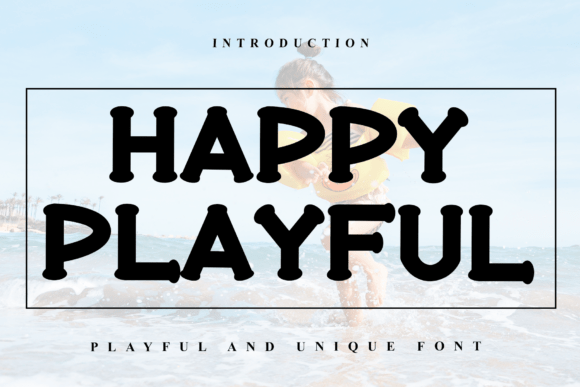
Happy Playful is a distinctive sans-serif display font designed with a balance of minimalism and personality. Its rounded corners and carefully crafted letterforms give it a soft yet bold presence, making it stand out in both digital and print applications. Unlike many standard sans-serif fonts that lean either strictly formal or overly casual, Happy Playful bridges the gap, offering a versatile option for designers looking to convey approachability without sacrificing professionalism.
What Makes Happy Playful Unique
At its core, Happy Playful distinguishes itself through its thoughtful design choices. The rounded edges soften the overall appearance, giving it a friendlier tone compared to more angular or rigid sans-serif fonts. Each letterform is intentionally shaped to maintain clarity and readability, even at larger display sizes. This makes it especially effective for branding materials, social media graphics, and logo design, where visual impact and legibility are crucial.
Unlike traditional geometric sans-serif fonts that can feel clinical or impersonal, Happy Playful incorporates subtle variations in stroke width and character shape. These details contribute to its expressive nature, allowing it to convey warmth and creativity without appearing unprofessional. This duality makes it a strong contender for projects that require both modernity and a human touch.
Happy Playful vs. Similar Font Styles
When comparing Happy Playful to other sans-serif display fonts, several design considerations come into play. Many minimalist sans-serif fonts prioritize clean lines and uniformity, often at the expense of character and personality. In contrast, Happy Playful retains structural simplicity while introducing subtle design quirks that make it visually engaging.
- Geometric sans-serif: Fonts like Futura or Avenir offer a structured, modern look but can feel cold or impersonal in certain contexts. Happy Playful introduces warmth through its rounded forms and more organic shapes.
- Grotesque sans-serif: Fonts such as Helvetica or Arial are known for their neutrality and widespread use. However, they often lack the distinctiveness needed for branding where a unique voice is essential. Happy Playful provides a more expressive alternative without compromising readability.
- Humanist sans-serif: Fonts like Gill Sans or Calibri offer a more natural rhythm and are generally more readable in body text. However, they may not have the bold presence needed for display use. Happy Playful excels in headlines and branding applications where visual impact is key.
When Happy Playful Is the Right Choice
Happy Playful shines in applications where a modern, approachable aesthetic is desired. It works exceptionally well in branding for lifestyle, wellness, and creative industries where a balance of professionalism and personality is important. Its rounded edges and open letterforms make it particularly effective in digital environments, where screen readability can be a concern.
Some ideal use cases include:
- Logo design for startups or creative businesses
- Social media content and digital marketing assets
- Website headers and app interfaces
- Print materials such as packaging, posters, and brochures
In each of these scenarios, Happy Playful brings a fresh, contemporary feel that enhances visual communication without overwhelming the message.
Considerations and Tradeoffs
While Happy Playful offers many benefits, it’s important to consider potential tradeoffs. As a display font, it is best suited for headlines and short text rather than extended body copy. Its stylistic features, while visually appealing, may not be ideal for long-form reading or situations where a more neutral tone is required.
Additionally, while its rounded corners contribute to its friendly appearance, this characteristic may not align with brands that aim for a more serious or authoritative tone. In such cases, a more conventional sans-serif or serif font may be a better fit.
Designers should also be mindful of pairing Happy Playful with complementary fonts. Due to its distinctive style, it pairs best with simpler, more neutral typefaces that allow it to stand out without creating visual clutter.
Comparing Happy Playful to Alternative Approaches
Designers often face the challenge of choosing between a highly stylized font and a more versatile, workhorse typeface. Happy Playful sits somewhere in the middle—it offers enough character to be memorable while maintaining the clarity needed for professional use.
In contrast, some designers may opt for more neutral sans-serif fonts that offer broader flexibility across different media. However, this often comes at the cost of visual distinctiveness. Happy Playful provides a middle ground, allowing for creative expression without sacrificing functionality.
Another consideration is the use of custom or hand-crafted fonts versus well-designed off-the-shelf options. While custom typography can offer a unique brand identity, it often requires more time and resources. Happy Playful provides a ready-made solution that delivers a similar effect with less investment, making it an attractive choice for smaller businesses and independent creators.
Final Thoughts: Choosing the Right Font for Your Project
Selecting the right font involves more than just aesthetics—it's about finding the right voice for your message. Happy Playful offers a compelling blend of modernity and warmth, making it a strong contender for designers seeking a font that balances creativity with professionalism.
When evaluating Happy Playful against other options, consider the tone you want to convey, the medium in which the font will be used, and how it complements your overall design system. In many cases, Happy Playful will be the right choice for branding, digital content, and visual storytelling where a soft yet confident presence is desired.
Ultimately, the best font is the one that aligns with your project’s goals and enhances the user experience. Whether you choose Happy Playful or another option, thoughtful typography can make a meaningful difference in how your message is received.