Psychodrama: A Bold Font for High-Impact Horror Design
Understanding Psychodrama
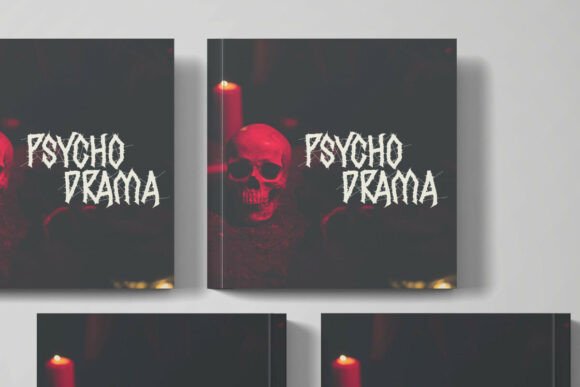
Psychodrama is a display font designed to evoke intense emotion and psychological tension. With jagged edges, irregular strokes, and distressed textures, it mimics the chaotic energy of horror and thriller genres. Unlike standard typefaces, Psychodrama does not aim for symmetry or clean lines. Instead, it embraces imperfection to create a sense of unease and raw visual impact. This makes it especially suitable for design contexts where emotional intensity and dramatic flair are central to the message.
Why Psychodrama Stands Out
Designers seeking to communicate fear, suspense, or psychological depth often struggle to find typography that matches the tone of their visuals. Psychodrama fills this gap by offering a typeface that feels dynamic and emotionally charged. Its rough contours and uneven textures suggest movement and instability, qualities that are difficult to achieve with more conventional fonts. This visual intensity makes it a compelling choice for projects that require immediate emotional engagement.
What sets Psychodrama apart is its ability to function as both a typographic and artistic element. In many cases, the font itself becomes a focal point, contributing to the overall mood of the design rather than simply delivering text. This dual function can be particularly valuable in branding or promotional materials where typography must work alongside imagery to create a cohesive aesthetic.
Applications Where Psychodrama Excels
Psychodrama shines in environments where visual drama and thematic cohesion are key. Some of the most effective applications include:
- Movie posters – Especially for horror, thriller, or psychological dramas where the font reinforces the film’s tone.
- Halloween and event promotions – Its unsettling appearance aligns well with seasonal horror themes and alternative events.
- Music album covers – Particularly for genres like metal, gothic rock, or experimental music that rely on intense visual identity.
- Gaming graphics – Used in titles, logos, or in-game text to enhance the atmosphere of horror or action titles.
- Book covers and promotional materials – Especially for horror fiction, noir, or psychological thrillers.
In each of these scenarios, Psychodrama enhances the visual narrative. Its handmade quality and irregular shapes lend authenticity, making designs feel more organic and expressive.
Benefits of Using Psychodrama
When used appropriately, Psychodrama offers several distinct advantages:
- Emotional resonance – The font communicates tension and chaos without needing additional visual elements.
- High visual impact – Its bold, irregular design ensures it stands out in print and digital formats.
- Versatility in thematic design – While ideal for horror, it can be adapted for alternative, edgy aesthetics in branding or editorial design.
- Completeness – With uppercase, lowercase, punctuation, and numerals, it supports full text use without requiring supplementary fonts.
These features make Psychodrama an efficient and expressive choice for designers looking to convey psychological depth and visual intensity without compromising readability.
Considerations and Tradeoffs
Despite its strengths, Psychodrama is not universally applicable. Its intense visual character can become overwhelming in certain contexts. For example:
- Long-form text – Due to its irregular shapes and lack of uniformity, it may be difficult to read in extended paragraphs.
- Professional or formal settings – The font’s chaotic nature may not align with corporate or academic design standards.
- Brand consistency – Brands aiming for a clean, minimalist aesthetic may find it too disruptive or niche.
Additionally, because of its strong thematic presence, Psychodrama may limit flexibility. Once used in a particular context, it may be difficult to repurpose in a different genre without appearing mismatched.
When to Consider Alternatives
While Psychodrama delivers a strong emotional punch, it’s not always the best choice. Designers should consider alternatives when:
- The project requires high readability over visual flair.
- The design needs to maintain a neutral or professional tone.
- The font must blend into a broader typographic system rather than dominate it.
- The intended audience may perceive the font as too aggressive or niche.
In such cases, more restrained horror-themed fonts or serif/sans-serif alternatives with subtle distress effects may offer a better balance between mood and usability.
Making the Right Choice
Choosing a font like Psychodrama involves more than aesthetics — it’s a decision about tone, audience perception, and functional design. To determine whether Psychodrama fits your project, ask the following questions:
- Does the font support the emotional tone of the design?
- Will it be used primarily for headlines, logos, or short text?
- Is the design thematic and expressive, or does it need to remain neutral?
- Will the font contribute to brand recognition or distract from it?
If the answers align with the characteristics of Psychodrama — high drama, psychological intensity, and visual boldness — then it may be an excellent fit. However, if clarity, neutrality, or subtlety is more important, it may be better to explore other typographic options.
Conclusion
Psychodrama is more than a font — it’s a design tool that brings emotional depth and visual energy to any project. When used effectively, it enhances the storytelling of horror, suspense, and alternative themes. However, its intense character means it should be chosen deliberately, with a clear understanding of its strengths and limitations. By evaluating your design goals, audience expectations, and application context, you can determine whether Psychodrama will elevate your work — or whether a more restrained alternative would be more appropriate.